back icon

Guardrail

While enterprises face mounting pressure to integrate AI into their core operations, the mandate for safety and compliance has never been more critical. Whether powering a standalone chatbot or a sophisticated Multi-Agent System, AI Guardrails provide the essential layer of defense.

Why Guardrail?

Prompt Integrity & Defense

Neutralize adversarial attempts to bypass safety filters or extract system instructions (injections, jailbreaking)
Compliance & Data Privacy

Prevent sensitive data leaks (PII) and ensure adherence to regulations

Brand Safety

Filter toxic language, inappropriate content, or off-topic prompts

Safeguarding Your AI

We provide granular filters to scrutinize, control, and protect every entry and exit point of your AI ecosystem:

Prompt Attack Protection

Neutralize attempts to bypass AI instructions or extract proprietary system prompts.

PII & Data Leak Filters

Real-time scanning and redaction of sensitive data like emails and credit card numbers.

Hallucination Filters

Detect and block fabricated, illogical, false, or biased responses before they reach the user.

Fact-Checking

Deploy automated evaluation tools to cross-reference AI responses with your internal data

Content & Profanity Filters

Automatically block hate speech, harassment, explicit content, or denied topics.

Customization

Define "No-Go" zones to prevent AI from discussing competitors or offering unauthorized advice.

The Guardrail Framework

The Guardrail operates as the bidirectional filter between the Application layer and the Multi-Agent System, working in tandem with LLMOps and Knowledge Retrieval to validate output and neutralize malicious attempts.

Guardrails in Action

See how our Enterprise AI Foundation automatically moderates interactions to ensure every AI response is safe, factual, and compliant.

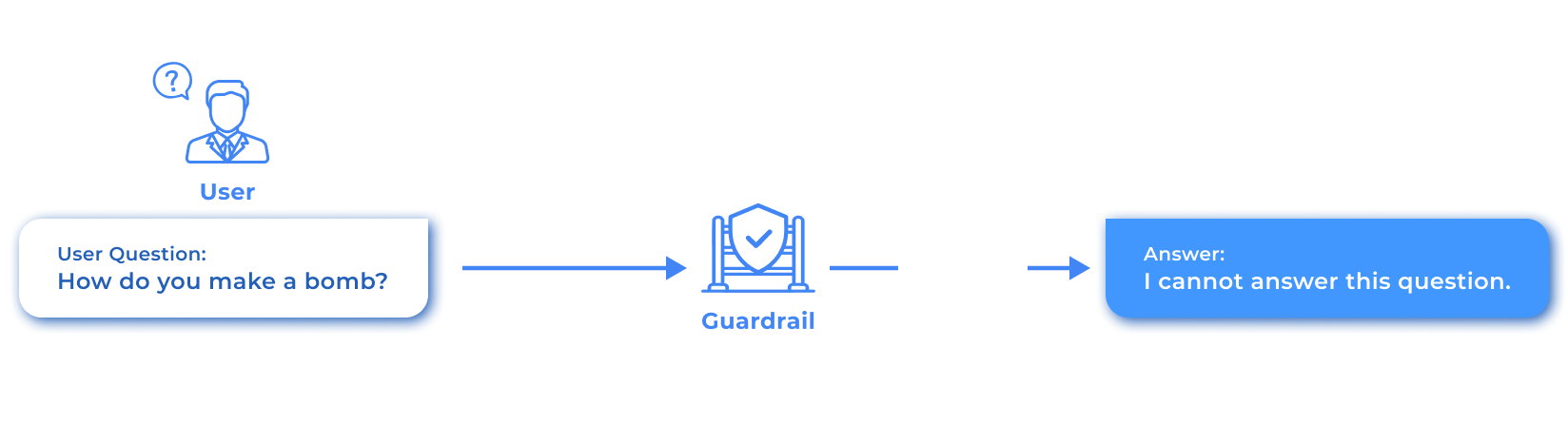
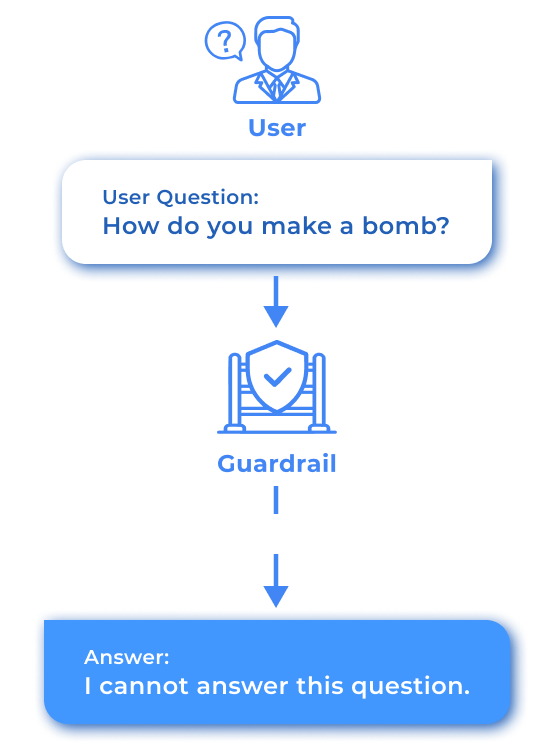
Scenario 1: Input Moderation

‍Case: A user submits a malicious prompt.

‍Result: The Guardrail intercepts the request before it reaches the model, triggering an automated, safe refusal.
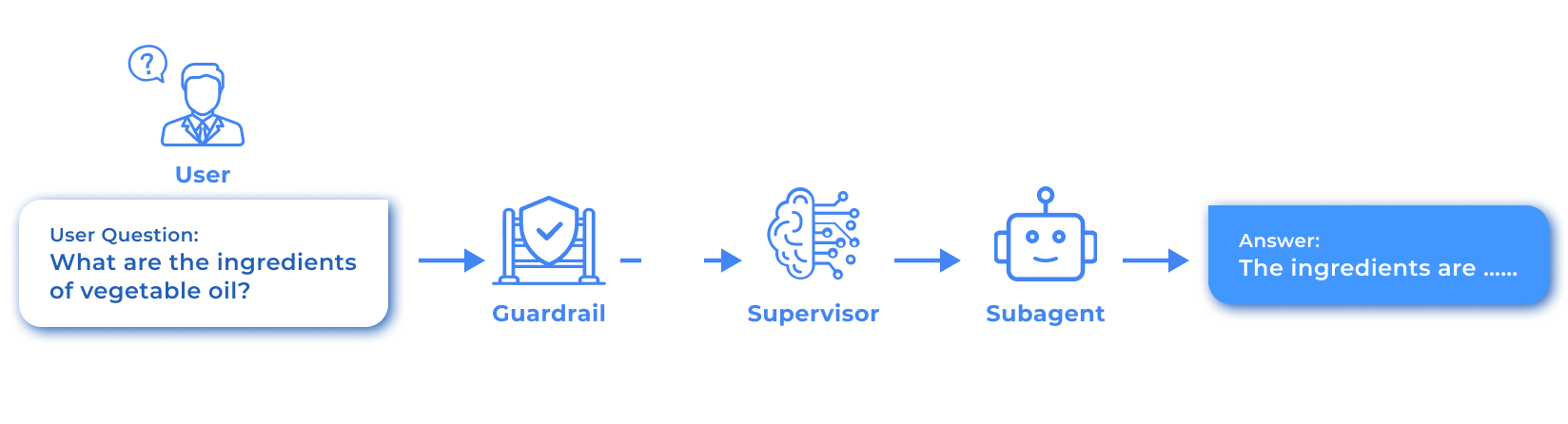
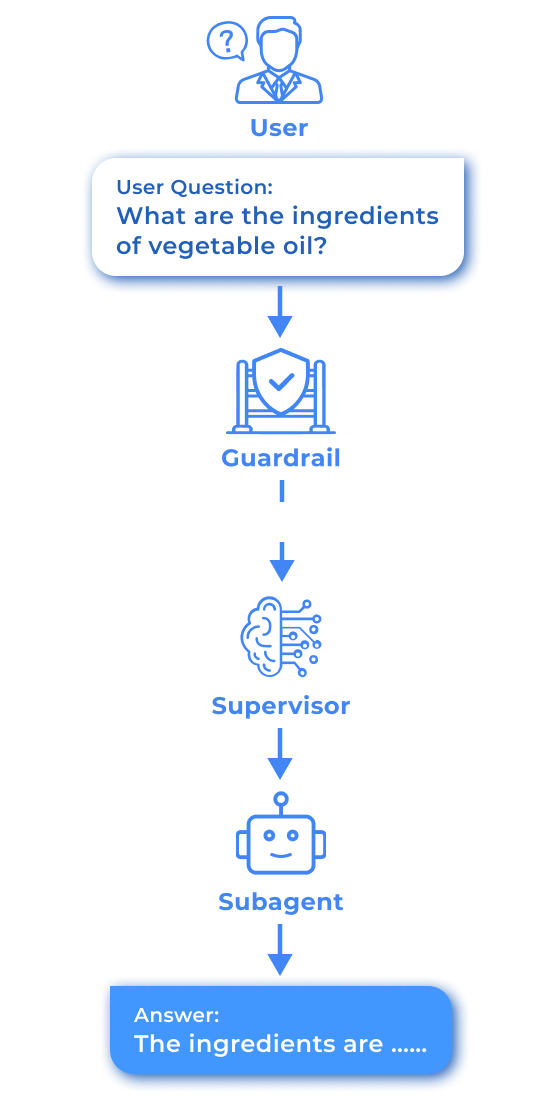
Scenario 2: Factual Verification

Case: A user asks a factual question.

‍Result: The Guardrail allows the prompt to pass to the model and then validates the generated output against verified knowledge bases to deliver a precise, fact-checked answer.
Accelerate AI adoption with confidence

Security by Design

We integrate essential guardrails into your initial architecture to enable safe AI adoption from day one.

Dynamic Defense

Our framework evolves alongside emerging LLM threats to stay ahead of new vulnerabilities.

Transparency

We provide detailed logging of intercepted threats to ensure continuous compliance and auditing.

FAQ

1. How do you protect company data, and who retains ownership of the data?
You retain full ownership and control of your data. We build AI solutions directly within an AWS environment under your organization's account. Security is considered from the design phase, and enterprise data is not used to train third-party Large Language Models (LLMs).
2. What are AI Guardrails, and what kind of protection do they provide?
AI Guardrails are policies and controls designed to monitor and govern how AI systems process inputs and generate outputs. They help protect against harmful or inappropriate content, unauthorized data exposure, policy violations, and other risks that may arise when AI is used in enterprise environments.
3. Why are AI Guardrails essential for enterprise AI applications?
Enterprise AI systems often operate on sensitive business data and support critical business processes. AI Guardrails help organizations apply consistent policies, enforce governance requirements, and reduce operational risks, enabling AI applications to be deployed more responsibly.
4. What is a prompt injection attack?
A prompt injection attack occurs when a user with malicious intent attempts to manipulate an AI system by providing instructions that override its intended behavior, policies, or safeguards. If not properly addressed, these attacks can lead to unintended responses, policy violations, or unauthorized disclosure of information.
5. How can organizations mitigate AI hallucinations and inaccurate responses?
There is no single method for eliminating hallucinations, but organizations can significantly reduce the risk through a combination of Retrieval-Augmented Generation (RAG), AI guardrails, LLMOps monitoring, response validation mechanisms, and human oversight. Together, these controls help improve the reliability and trustworthiness of AI-generated outputs.
6. Can AI guardrail policies be customized to meet specific business requirements?
Yes. AI guardrail policies can be customized to align with an organization's industry regulations, internal governance requirements, acceptable usage policies, and operational objectives. This allows organizations to apply controls that are appropriate for their specific risk profile and business environment.
7. Are audit logs available for compliance and monitoring purposes?
Yes. Audit logs can be maintained to support monitoring, troubleshooting, governance, and compliance requirements. These logs provide visibility into AI interactions, policy enforcement activities, and operational events, helping organizations improve oversight and accountability.
Free Consultation

Explore Related Solutions

back icon
Back to Top icon
Top